SOLAR PANEL INSTALLATION
Solar PV & Battery Installation in Milton Keynes
At Solar Partner, we specialise in residential, commercial, and agricultural solar PV and battery installations in Milton Keynes and surrounding areas. As a family-run business with over 16 years’ experience, we provide high-quality installations that are fully compliant, fully insured, and backed by comprehensive documentation.
Our long-standing clients trust us, with many systems installed and are still performing efficiently.
📞 Call Solar Partner on 07919 686 076 for a FREE site survey and quotation.
Why Documentation is Essential for Solar PV & Battery Systems
Installing a solar PV system or battery is a long-term investment. Proper documentation ensures that your system is:
Fully MCS-compliant and safe
Eligible for Smart Export Guarantee (SEG) payments
Covered by manufacturer and installer warranties
Protected by insurance
Easy to maintain or upgrade in the future
At Solar Partner, every customer receives a complete handover pack containing all essential certificates and documents.
Free Quotes & On-Site Survey – Milton Keynes
Before installation, we conduct a detailed site survey to ensure your property is suitable for solar panels and/or battery storage. Our survey covers:
Roof orientation, pitch, and shading analysis
Structural integrity for roof-mounted panels or battery units
Access for installers and equipment
Cable routing and inverter placement
Fuse board compatibility and electrical supply checks
After the survey, we provide a written quotation tailored to your site and energy needs.
Project Planning & Planning Permission Assistance
Some installations require planning permission, particularly:
Large commercial or agricultural systems
Listed buildings or conservation areas
Roofs with unusual or complex structures
Solar Partner will guide you through every step, including:
Preparing planning applications
Submitting applications to the local authority
Providing advice to meet compliance standards
Learn More About Planning Approval
DNO Approval – Grid Connection Compliance
Solar systems must comply with Distribution Network Operator (DNO) regulations before connecting to the electricity grid. Solar Partner manages all applications, ensuring compliance with:
G98 – small systems ≤3.68kW per phase
G99 – larger systems >3.68kW per phase
G100 – Export Limitation Schemes (ELS) when required
We handle communication with the DNO to guarantee your system is legally connected and eligible for export payments.
Structural Appraisal – Safety First
We assess your roof or mounting structure to ensure it can safely support:
Solar panels
Battery storage units
Mounting hardware
For older or unique structures, a structural engineer report may be provided.
Learn About Structural Appraisal
Step-by-Step Solar PV & Battery Installation Process
Step 1 – Acceptance of Quotation
Confirm you wish to proceed via phone or email.
Step 2 – Contract Signing
Contract emailed for signature
Sign in two locations (photo copies accepted)
Deposit payment held securely in Client Account
Step 3 – Pre-Installation Works
Electric meter replacement (if required)
Fuse board or wiring upgrades
DNO notification and grid connection applications
Planning permission submission (if required)
Step 4 – Agree Installation Date
We schedule a convenient date and confirm site access requirements.
Step 5 – Scaffolding Setup
Typically installed day before roof work
Ensure clear access for vehicles and equipment
Step 6 – Solar Panel Installation
Securely mounted using PV mounting systems
Roof made watertight and fully supported
Customer presence optional if roof access is available
Step 7 – Inverter & Electrical Installation
Inverter installed in attic, garage, or utility room
Cabling connected to panels and fuse board
Conduits installed for exposed wiring
Isolator switches and generation meter installed for safety
Step 8 – System Commissioning
Full system switch-on and testing
Grid connection verified
Export limitation settings applied (if required)
Step 9 – Final Payment & Documentation
After installation, customers receive a complete documentation pack, including:
MCS Certificate
Electrical schematic diagrams (AC/DC, single-line)
Commissioning certificates for inverter and battery
Operation & Maintenance Manual
Manufacturer warranties for panels, inverters, batteries, and mounting system
Insurance voucher
Step 10 – Scaffolding Removal
Removed after full payment clearance
Site fully cleared of debris
Step 11 – Export Payments Assistance
Support completing SEG or FIT applications
Guidance on reading and submitting generation meter readings
Step 12 – Project Completion
Fully operational system
Start generating clean energy, reduce bills, and cut carbon footprint
Step 13 – Ongoing SEG Payments
Energy supplier may request quarterly generation meter readings
Step 14 – Compliance Approvals
Customer receives confirmation letters from:
Grid Operator (DNO)
ELECSA / Part P compliance
Local Planning Authority (if planning was required)
Keep all documents safe — essential for warranty, insurance, and future maintenance.
Key Documents You Will Receive
Every installation includes:
MCS Certificate – validates system compliance and SEG eligibility
Commissioning Certificates – inverter and battery commissioning
Electrical Schematic Diagrams – AC, DC, and single-line
Operation & Maintenance Manual – operating instructions, maintenance guidance, emergency procedures
Manufacturer Warranties – panels, inverters, batteries, mounting system
Insurance Voucher – to validate insurance coverage
Why Choose Solar Partner in Milton Keynes
Family-run business with 16+ years’ experience
High-quality equipment and professional workmanship
Transparent process with step-by-step guidance
Comprehensive handover documentation for complete peace of mind
📞 Contact Solar Partner today on 07919 686 076 for a FREE site survey and quotation.
Some examples of the types of mounting systems we use are shown below -
 | In-roof systems are typically for residential buildings. The solar panels are in-line with the roof tiles. A back sheet is behind the panels to prevent water ingress. Advantages of this system are birds and squirrels can not nest under the panels, however the panels do get very hot in the summer due to the lack of air flow behind the panels. This can reduce performance of the panels. Suitable for new builds when the roof tiles do not need to be removed. |
 | Roof hooks - stainless steel roof hooks that fix directing to your roof rafters. Typically used for retro fitting a system to a residential building. Solar Partner always ensures that the hooks do not touch the roof tiles. This will prevent the tiles under the hooks from cracking. Advantages of raising the panels over the roof tiles is that a good flow of air disperses the heat and cools the panels in the height of summer, so they are more efficiency. Furthermore, with roof tiles behind the panels any risk of a fire spreading into the the building is reduced. Disadvantages, are that birds and squirrels can nest under the panels. Therefore, netting is required that increase costs. |
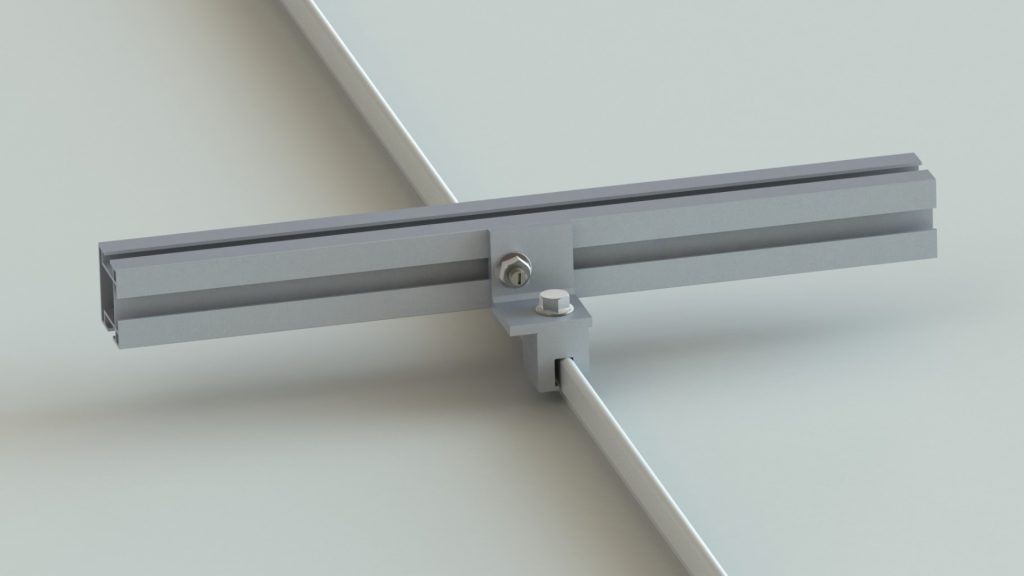 | Standing seam flat sheet roofs. This system does not penetrate the metal sheet roof. The rails are clamped onto the standing seam. Typically for commercial buildings. |
 | Stainless steel hangar bolts for corrugated roof sheets. Bolts are fixed into the steel z purlins or into timber purlins. Typically profiled sheets are on agricultural and industrial buildings. A great deal of care needs to be taken. The sheet are fragile and crawl boards and fall arrest systems must be used. Sheets could be made of asbestos requiring specialist equipment and attention. |
 | Aluminium frames for flat roof solutions. The solar panels can be mounted in a portrait or landscape configuration. This system will require mounting to the roof structure or ballast (like paving slabs) to weigh the panels and frame down. If the panels are higher than the highest point of the building, planning approval will be required. |
 | Ground mount systems - suitable for large systems where there is suitable land available. Quick, easy and effective ground screws that are driven into the soil reducing the need for concrete. Made from stainless steel and aluminium ensures the structure will last and look good for more than 25 years. For large systems planning approval will be required. |
House  | Office  | Agriculture  | Car Park  |